How to Remove Acrylic Nails Safely
Acrylics should be soaked off with pure acetone over 20 to 40 minutes, never pried, peeled, or forced. Almost all of the nail damage blamed on acrylics happens during removal, not during the weeks you wore them. Here is the safe method, and how to recover a nail plate that already took a hit.
The short answer
Soak, do not pull. Acrylic dissolves in pure acetone, and once it has softened it lifts away with almost no pressure. The damage people associate with acrylics — white patches, thin bendy nails, tender beds — is overwhelmingly caused by removing a set that had not finished softening. If you take one thing from this guide: when it resists, it needs more time, not more force.
Why peeling acrylics off does real damage
Acrylic bonds to the top layers of the nail plate. When you pry a set off, the bond does not politely release — it takes those layers with it. That is what leaves the white, chalky patches and the paper-thin flexibility afterwards.
It compounds a starting point that is already thinner than usual. The American Academy of Dermatology explains that for acrylic to stick, "the surface of your natural nails must be filed until they feel rough," which "thins your natural nails, making them weaker." Their overall summary of artificial nails is direct: they "can leave your nails thin, brittle, and parched." Start thinner, then rip off another layer, and you get a nail that needs months to come back.
The safe soak-off method, step by step
- File off the top coat. Take the shine down with a coarse file so the acetone can actually reach the acrylic. Do not file into the natural nail.
- Clip the length down. Less material means less soaking. Cut back to near your natural nail line.
- Protect the skin. Rub petroleum jelly or a thick balm onto the skin around each nail. Acetone is harsh on skin, and the FDA specifically flags avoiding skin contact with nail chemicals to reduce the risk of an allergic reaction.
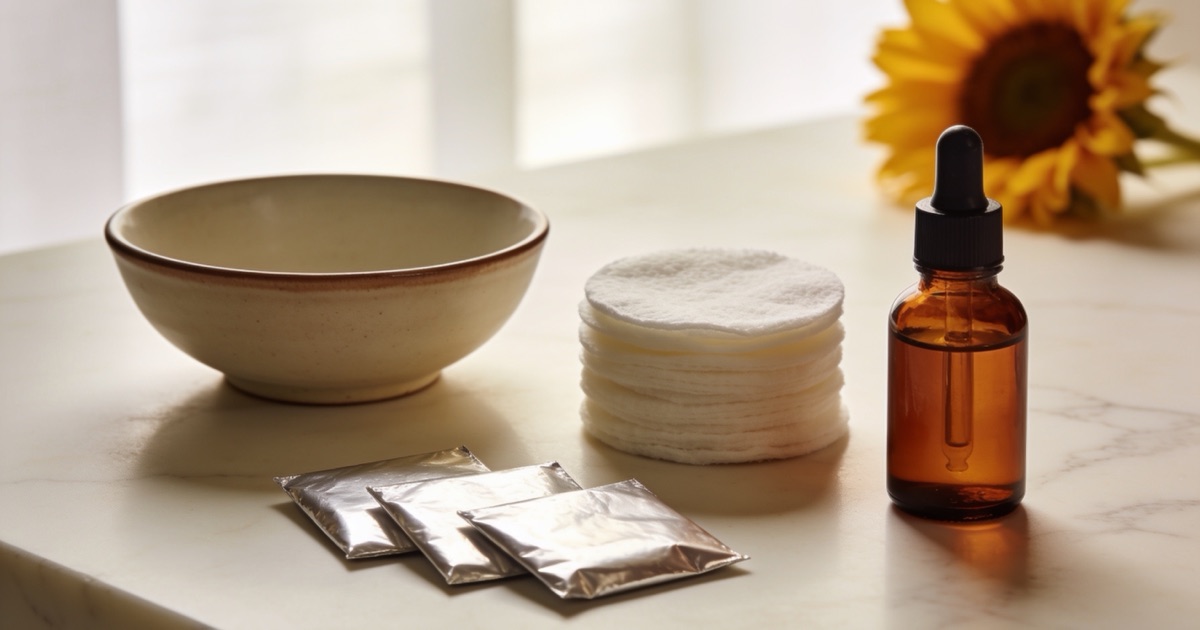
- Soak with pure acetone. Saturate a cotton ball, place it on the nail, wrap the fingertip in foil. The AAD recommends soaking only your fingertips rather than submerging your whole hand.
- Wait 20 to 40 minutes. Do not check every three minutes — breaking contact restarts the process. Leave it alone.
- Push, never pry. The acrylic should be soft and gummy. Ease it off with a wooden stick. If a nail resists, re-wrap it and give it another 10 minutes.
- Buff lightly, then flood with oil. Smooth any ridges gently, then apply cuticle oil and a heavy moisturiser. The AAD advises moisturising nails and cuticles several times a day.
Never use anything metal to scrape, and never pull a nail that is still hard. Both are how a routine removal turns into three months of recovery.
Home removal vs a professional soak-off
| At home | Professional | |
|---|---|---|
| Time | 40–70 minutes, hands occupied | Part of your appointment |
| Risk to natural nail | Higher — easy to lose patience | Low — controlled, monitored |
| Damage assessment | None | Nail checked and prepped as needed |
| Best when | You cannot get to an appointment | Any time you can plan ahead |
If you are getting a new set anyway, there is no reason to do it yourself the night before. Ask Clau about removal on WhatsApp when you book.
How to recover a thin, damaged nail plate
Damaged nails are not permanent. They regrow, and the timeline is measurable: a 2024 study in the Indian Journal of Plastic Surgery measuring 500 fingernails found growth of about 0.103 mm per day, roughly 3 mm per month. A fingernail plate is around 12 to 15 mm long, so a completely fresh plate takes about four to six months. What you do in the meantime:
- Oil daily, moisturise more. Cuticle oil for the nail, a heavy cream or petroleum jelly for the surrounding skin.
- Keep them short. Short nails do not catch, bend, or tear while they are weak.
- Gloves for cleaning and dishes. Detergents strip what little moisture the plate is holding.
- Skip the buffing. Buffing out ridges feels productive and removes exactly the layers you are trying to grow back.
- Take a real break if needed. A few weeks bare, or a gentler option while you recover.
If a nail is painful, separating from the bed, discoloured, or thickening, that is a dermatologist visit, not a nail-artist one. The AAD recommends inspecting bare nails between sets precisely so you catch that early.
Getting a new set on nails that are already thin
You do not necessarily have to wait. What has to change is the prep. Tell your artist before the appointment that your nails are thin — the filing should be minimal, the shape shorter to reduce leverage, and the cuticles left completely alone, which the AAD recommends anyway because cuticles are the seal that keeps infection out.
This is one of the practical advantages of a one-on-one appointment over a walk-in chair: there is time to look at the nail and adjust, rather than applying the same prep to everyone. If your last set left your nails wrecked, say so when you message — it changes what happens at the appointment.
Keep reading
Common questions
Can I remove acrylic nails at home?
How long does it take to soak off acrylic nails?
Why are my nails thin and bendy after removing acrylics?
Should I take a break between acrylic sets?
Does acetone damage your nails?
Sources
Medical and safety claims in this guide are backed by the references below. Clau is a nail artist, not a medical professional — for a nail or skin condition, see a dermatologist.
- Artificial nails: Dermatologists' tips for reducing nail damage — American Academy of Dermatology
- Gel manicures: Tips for healthy nails — American Academy of Dermatology
- Nail Care Products — U.S. Food & Drug Administration
Ready to book in Sarasota?
Appointments are limited and by request only. Message on WhatsApp to check availability and get your custom quote.
Book on WhatsApp →